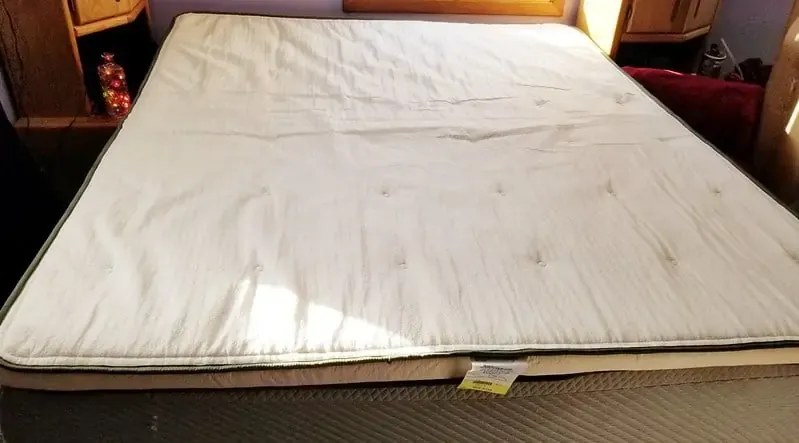
A good mattress topper can buy a tired mattress another year or two — adding pressure relief and comfort for a fraction of replacement cost. A bad topper purchase just delays the inevitable while you sleep on a problem. This guide explains when a topper is the right call, how thickness and density translate to feel, and which materials suit which sleepers.
When a topper helps — and when it’s denial
A topper helps when the mattress underneath is structurally sound but too firm, or has mild surface wear: you like the support, you just want more cushioning. It also helps guest beds and dorm beds where replacement isn’t your call. In those cases 2–4 inches of quality material genuinely transforms the sleep surface.
A topper cannot fix a mattress with deep body impressions (1.5 inches or more), broken or poking springs, or a sagging foundation — adding softness on top of a collapsed base just makes a softer collapse. Press your hand into the bare mattress: if it doesn’t spring back, or you can feel the support layer failing, put the topper money toward a replacement fund instead.
Thickness and density: reading the specs
Thickness sets how much the feel changes: 2 inches softens the surface modestly; 3 inches is the versatile middle that meaningfully adds pressure relief; 4 inches substantially reshapes the feel and suits side sleepers wanting real cushioning. Density (for foam, in lb/ft³) predicts durability more than feel — 3 lb+ memory foam lasts years, cheap 2 lb foam flattens within a year.
For latex toppers, ILD (firmness) matters more than density: low-20s ILD feels plush, low-30s medium, 40+ firm. Feather/down toppers add pillowy softness but minimal support and need regular fluffing; wool toppers regulate temperature beautifully but cost more and compress over time.
Materials and temperature
Memory foam gives the most pressure relief per inch but sleeps warmest — open-cell, gel-infused, or ventilated designs help, but all-foam still runs warmer than alternatives. Latex (Dunlop or Talalay) is responsive, cooler, and far more durable, at roughly double the price of equivalent memory foam. Down alternative is the budget softness play with the shortest lifespan.
Practical notes: a topper changes your bed height, so check that your fitted sheets still fit (deep-pocket sheets exist for exactly this). Many toppers need 24–48 hours to expand and off-gas — air them out before the first night. And use a mattress protector over the topper; replacing a stained topper is cheaper than replacing a mattress, but protecting it is cheaper still.
What this guide does not cover
This guide covers toppers, not mattress selection (see the side-sleeper mattress guide) and not medical advice for back pain — pain that persists regardless of surface deserves a professional, not more foam. It also doesn’t cover electric heated toppers or mattress pads (the thin quilted kind), which are a different product tier with different tradeoffs.
Frequently asked questions
Can a mattress topper fix a sagging mattress?
No — not sagging with deep impressions or failing support. A topper adds comfort to a sound mattress; it can’t rebuild a broken one.
What thickness of mattress topper is best?
3 inches suits most people — enough to change the feel without swallowing the mattress’s support. Go 2 for a subtle softening, 4 for maximum pressure relief.
Memory foam or latex topper?
Memory foam for maximum pressure relief on a budget; latex for cooler sleep, more bounce, and much longer lifespan at a higher price.
Will a topper make my bed too hot?
All-foam toppers add warmth. If you sleep hot, choose latex, ventilated foam, or wool — and make sure your sheets and protector are breathable too.
How long do mattress toppers last?
Quality memory foam: 2–4 years. Latex: 5+ years. Cheap low-density foam or fiberfill: about a year before it flattens.