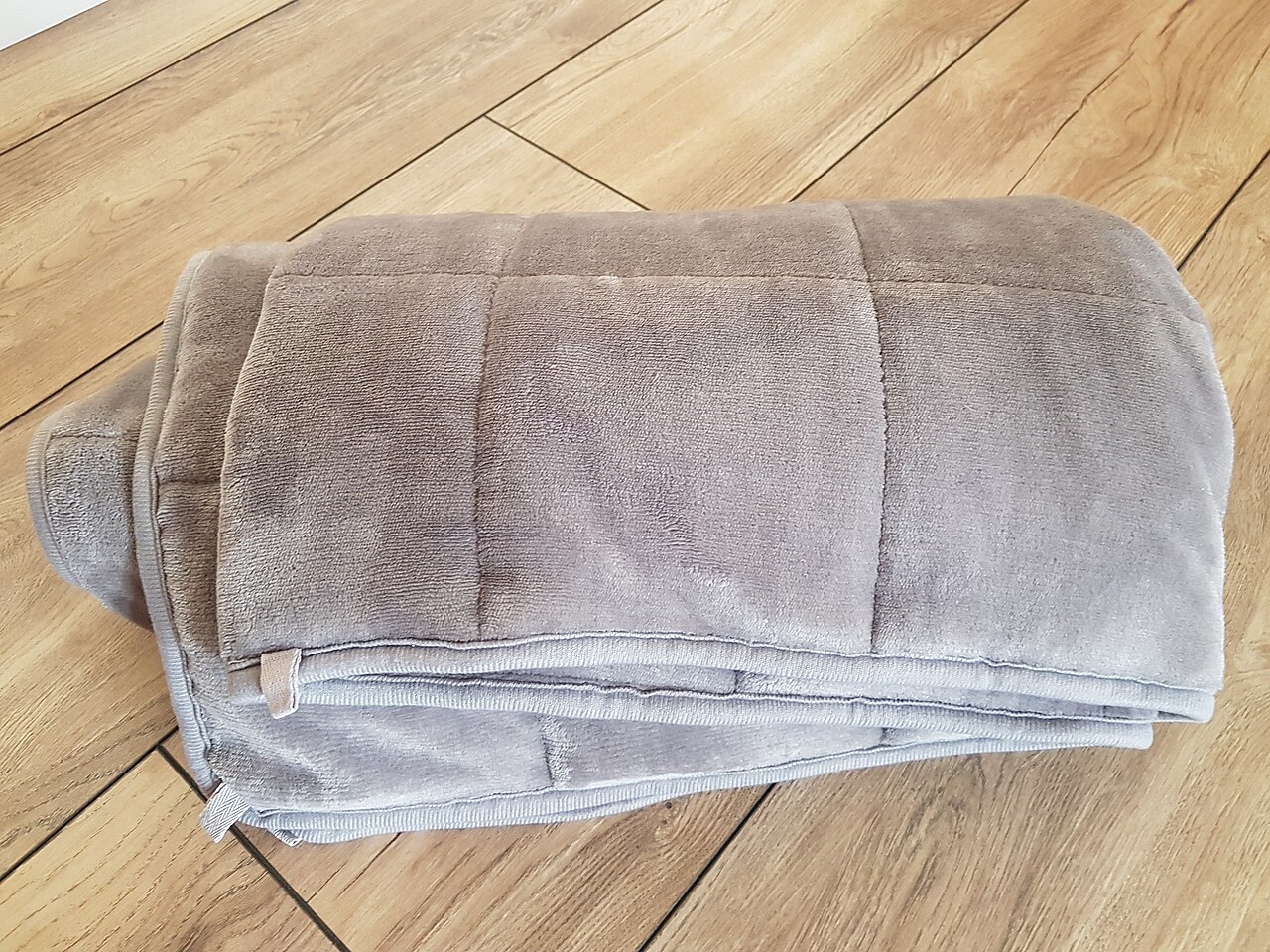
A weighted blanket feels like a firm, warm hug — deep pressure that many people find calming at bedtime. But weight, fabric, and fill make the difference between cozy and claustrophobic, and a few health conditions mean you should check with a doctor first. This guide covers how to choose the right weight, which materials sleep coolest, and who should skip weighted blankets entirely.
How heavy: the 10% rule and its limits
The standard guidance is a blanket around 10% of your body weight, give or take a couple of pounds — so roughly 12–15 lbs for most adults. It’s a starting point, not a prescription: personal preference varies widely, and some people love 20 lbs while others feel trapped at 12. If you’re between sizes or unsure, err lighter; you can always add weight, but a too-heavy blanket just sits in the closet.
Size matters as much as weight. A weighted blanket should cover you, not the whole bed — excess blanket hanging off the sides adds dead weight that pulls and bunches. Most adults want a twin/throw size even on a queen bed, unless you’re buying one per sleeper. Sharing one weighted blanket with a partner rarely works well.
Fill and fabric: the heat question
The weight comes from fill: glass micro-beads (dense, smooth, distribute evenly, sleep relatively cool), plastic poly-pellets (cheaper, bulkier, warmer), or steel shot beads (very dense, can feel lumpy). Glass beads are the current sweet spot for most buyers — even weight distribution without excess bulk.
The cover fabric determines temperature more than the fill does. For hot sleepers: bamboo, Tencel/lyocell, or cotton covers, and avoid plush minky/faux-fur covers unless you run cold. Some blankets have removable, washable covers — strongly preferred, because washing a 15-lb blanket at home ranges from difficult to washing-machine-breaking. Check whether the inner blanket is washable or cover-only before you buy.
What the evidence actually says
Honest framing: the research on weighted blankets is promising but modest. Small studies suggest benefits for self-reported anxiety and some insomnia symptoms, particularly the subjective feeling of calm at bedtime. It’s not a treatment for sleep apnea, chronic insomnia, or other sleep disorders, and the strongest effect seems to be “feels comforting” rather than measured sleep-architecture changes. Buy it for comfort, not as medical equipment.
Who should skip them or ask a doctor first
Weighted blankets are not for everyone. Check with a doctor first if you have sleep apnea, asthma or other respiratory conditions, claustrophobia, or circulation issues — added chest weight is a real consideration with breathing conditions. They’re not recommended for infants or toddlers, and children should only use them with pediatric guidance and a weight matched to the child. If you tend to overheat at night, prioritize breathable fabrics or skip the category.
What this guide does not cover
This guide is about consumer weighted blankets for adults, not weighted therapy products prescribed by occupational therapists, and not medical advice for any condition. It doesn’t cover weighted blankets for children beyond the “ask your pediatrician” rule. If anxiety or insomnia is significantly affecting your life, a clinician — not a blanket — is the right first step.
Frequently asked questions
How heavy should a weighted blanket be?
Around 10% of your body weight is the standard starting point — typically 12–15 lbs for adults. When in doubt, go lighter rather than heavier.
Can weighted blankets help with anxiety?
Many users report feeling calmer, and small studies support the subjective effect. It’s comfort, not treatment — meaningful anxiety deserves professional support.
Do weighted blankets make you hot?
They can. Glass-bead fills with bamboo or cotton covers sleep coolest; plastic pellets and plush minky covers sleep warmest. Hot sleepers should choose accordingly or skip the category.
Can two people share a weighted blanket?
Not well. The weight shifts toward whoever moves, and sizing gets awkward. One blanket per person works far better.
How do you wash a weighted blanket?
Ideally you don’t — you wash a removable cover. If the blanket itself must be washed, follow the manufacturer’s instructions exactly; many exceed home washer weight limits.