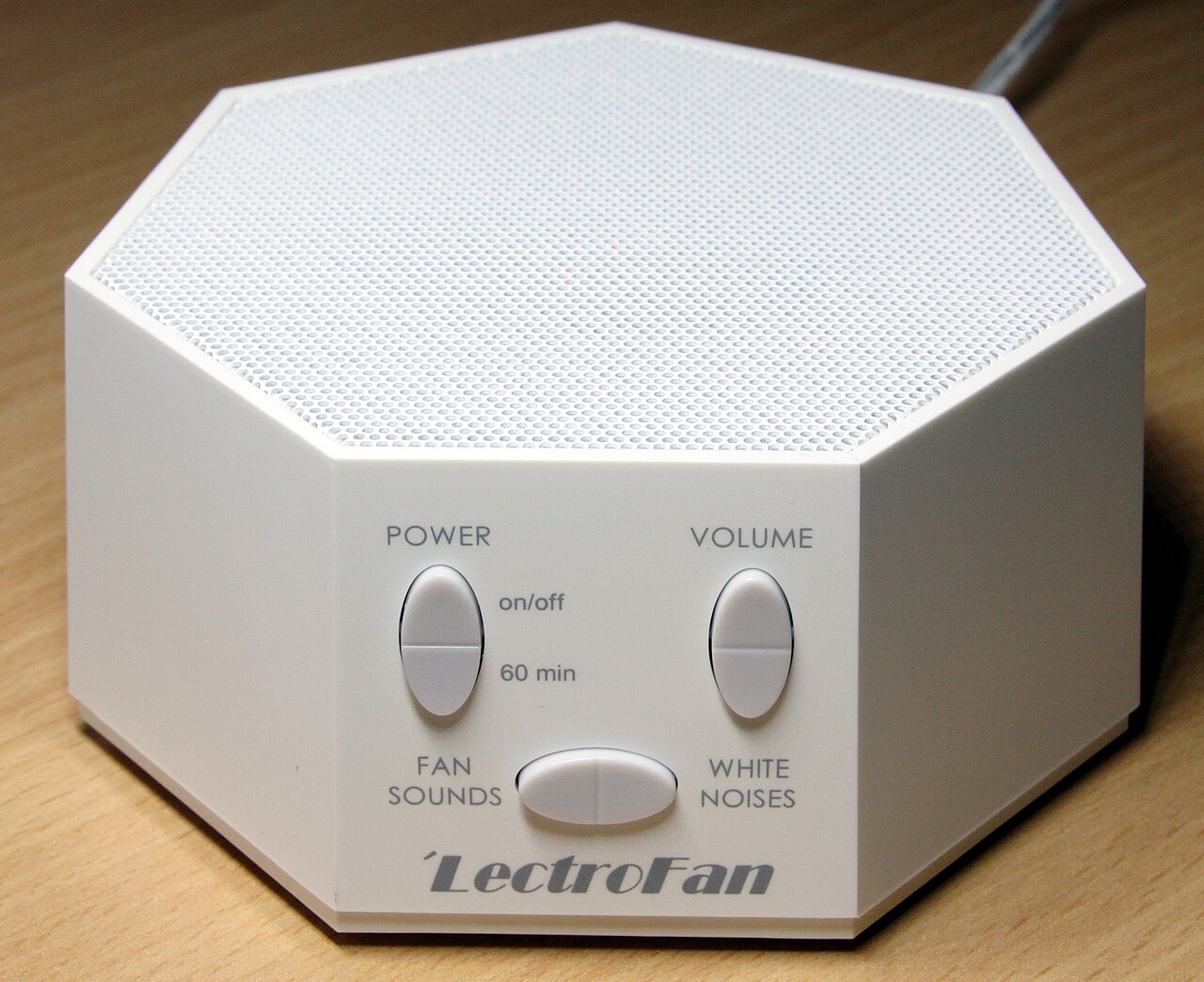
A good white noise machine makes your bedroom acoustically boring — traffic, snoring partners, and thin walls all fade into the same uninteresting hum. A bad one adds a new annoyance: a faint looping hiss, a too-quiet maximum volume, or buttons that beep at 2 a.m. This guide covers fan-based vs digital machines, the specs that predict success, and which designs to skip.
How sound masking actually works
White noise doesn’t cancel sound; it raises the background floor so sudden noises stand out less. Your brain notices changes in sound far more than steady sound — that’s why a dripping faucet is maddening and a humming refrigerator is invisible. A steady wash of sound lifts the quiet baseline, so a car door slamming outside becomes a small ripple instead of a jolt awake.
This has a practical consequence: the machine must be steady and continuous. Anything with a detectable pattern — a short audio loop, a rhythmic mechanical wobble — gives your brain exactly the kind of changing stimulus it’s trying to ignore. Steadiness is the whole game.
Fan-based vs digital: the core choice
Fan-based machines (the classic design) move real air through the unit to create sound mechanically. The result is genuinely non-repeating, natural-sounding noise with adjustable tone via air vents. Downsides: only one basic sound character, a physical fan that can develop bearing noise over years, and they’re bulkier.
Digital machines play generated or recorded sounds through a speaker — white noise plus pink noise, brown noise, rain, ocean, fan simulations, and more. Upsides: variety, compact size, often a timer and app control. The critical spec is loop length: cheap units loop a few seconds of audio, and sensitive sleepers hear the seam. Good ones use long or truly generated (non-looping) audio. If reviews mention “I can hear it repeat,” skip it.
What to check before buying
Volume range matters more than maximum loudness claims. You want fine-grained control at the low end too — the right level is usually just loud enough to soften intrusions, not a wall of sound. Machines with big volume jumps between steps make it hard to dial in. For safety, keep long-term nighttime levels moderate; consistently blasting high volumes inches from your head isn’t doing your hearing favors.
Also check: a real power adapter vs battery-only (batteries die at 3 a.m.), physical buttons you can find in the dark (backlit or distinct shapes beat a flat touch panel), and whether the buttons beep — a machine that chirps when you adjust it at night has failed at its one job. A headphone jack or Bluetooth output is valuable if your partner prefers silence.
Which to skip
Skip phone apps as a permanent solution: notifications, calls, and OS volume quirks make them unreliable, and keeping a phone by the bed all night defeats the purpose for many people. Skip novelty machines shaped like animals with a single tinny speaker — they’re toys. And skip anything where multiple reviews mention a high-pitched whine or a short loop; those flaws don’t improve with familiarity.
What this guide does not cover
This guide is about masking environmental noise, not treating medical sleep disorders — sleep apnea, chronic insomnia, and tinnitus need professional care, and masking can’t fix them. It also doesn’t cover hearing protection (see the earplugs guide for that) or architectural soundproofing, which is a different budget tier entirely. If you need very high volumes to sleep through the night, consider whether earplugs or addressing the noise source is the healthier answer.
Frequently asked questions
Is it bad to sleep with white noise every night?
For most adults at moderate volumes, no — it’s a widely used, low-risk sleep aid. Keep the volume as low as effective and give your ears occasional quiet nights if you’re concerned.
What’s the difference between white, pink, and brown noise?
White noise has equal energy at all frequencies (a bright hiss); pink and brown emphasize lower frequencies, sounding deeper and softer — more like rainfall or a low rumble. Many sleepers find pink or brown less harsh than pure white.
Fan-based or digital — which is better?
Fan-based can’t loop and sounds the most natural, but offers one sound. Digital offers variety and features. If you’re sensitive to repetition, fan-based is the safer bet.
Can white noise help with a snoring partner?
It helps with mild to moderate snoring by softening the peaks. Truly heroic snoring usually needs earplugs plus masking, or a conversation about a sleep study.
Where should I place the machine?
Between you and the noise source works best — near the window for street noise, near the door for hallway noise. A few feet from the bed at low volume beats right-by-the-pillow at high volume.