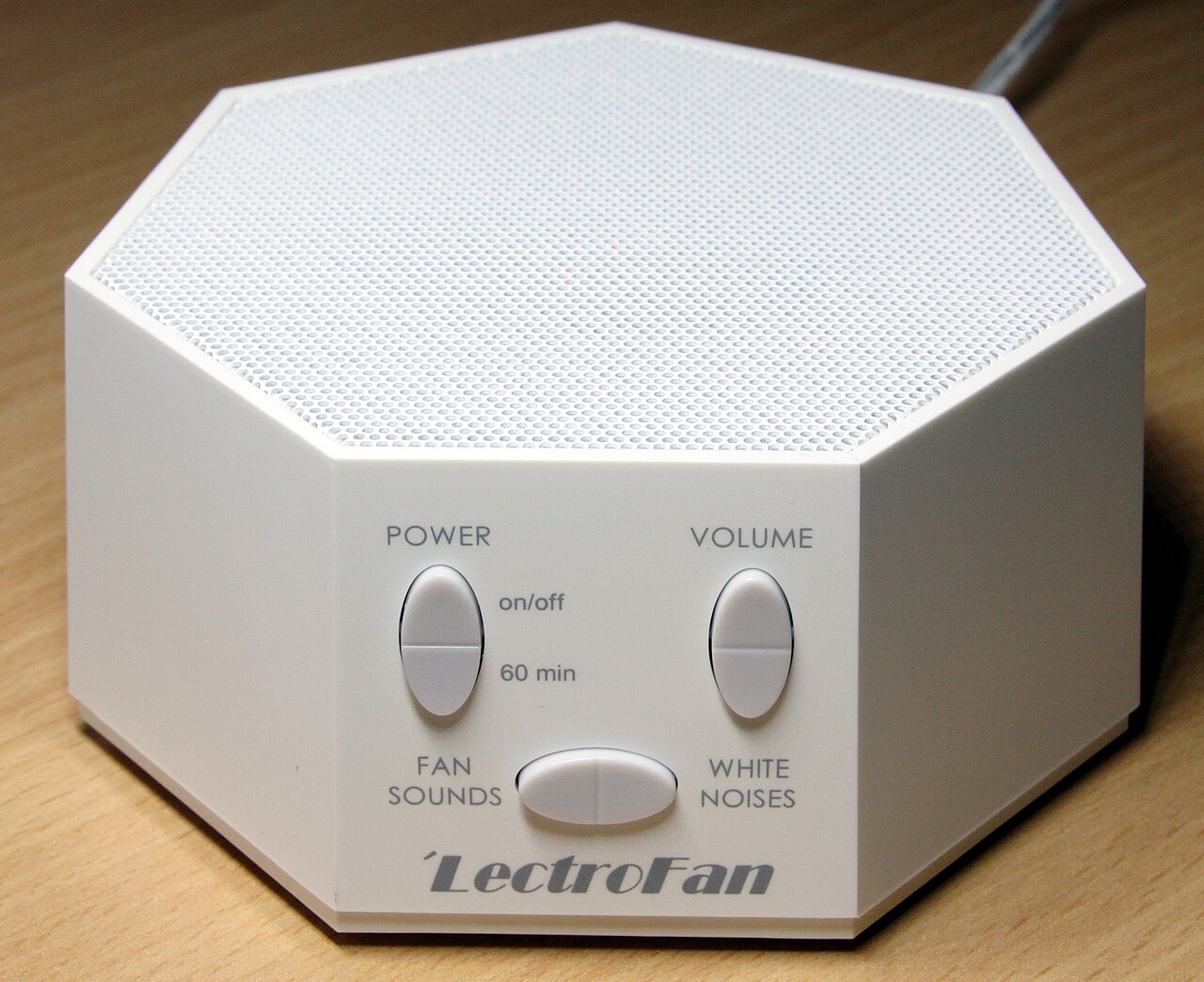
A bedroom fan does double duty: it moves air so you sleep cooler, and its steady hum masks the noises that would otherwise wake you — traffic, plumbing, a partner’s snoring. That’s why so many people who “can’t sleep without the fan” aren’t really fan people at all; they’re white-noise people who happen to get their white noise from a fan. But not all fans are bedroom-grade. The wrong one rattles, clicks, whines on low, or blasts you with air while barely moving the room’s heat. This guide covers how to read the noise specs, which fan types actually stay quiet, and the features that matter at 2 a.m.
Decibels, and why the spec sheet lies a little
Fan noise is measured in decibels (dB), and the scale is logarithmic — a 10 dB increase sounds roughly twice as loud. For reference, a quiet bedroom sits around 30 dB, a whisper is about 30 dB, and normal conversation is 60. A good bedroom fan on low should land in the 30–40 dB range: audible as a soft rush of air, not as a mechanical whine.
Here’s the catch: manufacturers measure at different distances, on different settings, and sometimes in ways that flatter the product. A “25 dB” claim usually means the lowest setting measured from several feet away in a lab — your experience at the pillow two feet away will differ. Treat dB claims as useful for comparing models within one brand’s lineup, and as rough guidance across brands. The far more reliable signal is the character of the noise: broad, smooth air-rush is sleep-friendly; whines, clicks, rattles, and oscillating squeaks are not, at any volume. Review comments mentioning “whine,” “rattle,” or “clicking” are disqualifying for bedroom use even when the dB number looks great.
One more truth: the low setting is the only setting that matters. Almost any fan is tolerable on high when you need maximum cooling; the question is whether its lowest speed is both quiet and still moving meaningful air. Fans with many speed steps (8, 12, even 24+) give you finer control over that tradeoff than the classic 3-speed models.
Fan types for the bedroom: tower, bladeless, and classic
Tower fans are the bedroom default for good reasons: slim footprint, wide oscillation, usually a remote, and generally the best noise-to-airflow ratio in the mid-price range. Their vertical design pushes air across a wide area without the focused blast of a directional fan. Downsides: they’re harder to clean (dust collects inside the column), and cheap ones develop oscillation squeaks over time.
Bladeless fans look great and are genuinely easier to clean — a wipe of the loop versus disassembling a grille. They’re also safer around kids and pets. But the “bladeless” name is slightly misleading about noise: the base contains a small high-speed impeller, and some models produce a noticeable high-pitched tone. They also cost two to three times what a good tower fan costs for similar airflow. Worth it for design and cleaning; not automatically quieter.
Classic bladed fans — pedestal, box, and desk styles — move the most air per dollar and are often the quietest at a given airflow, because big slow blades are inherently less whiny than small fast ones. A large-diameter fan on low is one of the best white-noise generators ever made. The tradeoffs are footprint, looks, and the grille-cleaning chore. If you don’t care about aesthetics and want maximum air with minimum noise per dollar, a big simple fan is hard to beat.
Ceiling fans deserve a mention as the actual best bedroom cooling device — silent, out of the way, and they make the whole room feel 4 degrees cooler through air movement alone. But they’re an installation project, not a purchase, so they sit outside this guide’s scope. If you own your bedroom and sleep hot, though, they beat every portable fan on this page.
Features that matter at 2 a.m.
A remote control isn’t a luxury for a bedroom fan — it’s the difference between adjusting the fan and fully waking up to do it. Look for a remote with a display or storage slot on the fan itself, because a remote lost in the bedding at midnight is a special kind of frustration. Backlit buttons are a plus.
A sleep timer (auto shut-off after 1–8 hours) matters if you like falling asleep to moving air but wake up cold at 4 a.m. — or if you just don’t want it running all day after you leave. Oscillation should be wide (70–90 degrees) and, critically, quiet; test reviews for squeak complaints. An adjustable head tilt helps when the fan sits low and you want air at body level rather than at the ceiling.
Night-mode or “sleep” settings on modern fans do two useful things: they drop to the quietest speed and they dim or kill the LED display. That display point is not trivial — a bright blue LED across a dark bedroom is exactly the kind of light pollution our blackout guide tries to eliminate. If the fan you like has a bright display with no dimming, a small piece of electrical tape is the time-honored fix.
Smart features (app control, voice assistant integration) are genuinely convenient for scheduling — fan on at bedtime, off at 5 a.m. — but they add failure modes and usually a price premium. Decide whether you’ll actually automate it or just use the remote like everyone else.
Placement: where the fan sits matters as much as which fan
A great fan in the wrong spot underperforms a mediocre fan in the right one. The goal is moving air across your body and through the room, not blasting your face. Place the fan so airflow crosses the bed lengthwise or diagonally — a corner placement with wide oscillation covers the most area. If the fan sits on a nightstand inches from your head, even a quiet model sounds loud; moving it six feet away drops the perceived noise dramatically while barely reducing the cooling effect.
Height matters too. Hot air rises and pools at the ceiling, so a fan placed low, angled slightly upward, mixes the room’s air layers instead of just stirring the warm zone. If your bedroom has a window, the classic cross-ventilation trick still works: fan near the window blowing in during cool evenings, or blowing out on hot days to exhaust warm air while cooler air enters from elsewhere. A fan fighting a sealed hot room is just a noise machine; a fan plus an open window is climate control.
Finally, mind the surfaces. A fan on a wobbly nightstand or hollow dresser amplifies vibration into a resonant hum that no dB rating accounts for. Solid floor placement, or a dense mat under a table fan, kills most vibration noise. And keep the intake clear — a fan shoved against a wall or buried behind curtains works harder, louder, and less effectively than one with a foot of breathing room.
What this guide does not cover
This guide covers portable bedroom fans, not ceiling fans (installation project), whole-room air purifiers (different buying logic, though some double as fans), or air conditioning — if your bedroom is genuinely hot, no fan substitutes for actual cooling. It also doesn’t cover dedicated white noise machines, which are the better pick if you want masking sound without moving air. And the usual caveat: fans don’t treat sleep apnea or other sleep disorders; they treat heat and noise.
Frequently asked questions
How quiet should a bedroom fan be?
Aim for the low-30s dB on the lowest setting — roughly the level of a soft whisper. More important than the number is the character of the sound: smooth air-rush is fine, while whines, clicks, or rattles will bother you at any volume.
Are bladeless fans quieter than tower fans?
Not necessarily. Bladeless fans hide a small high-speed impeller in the base that can produce a high-pitched tone. A quality tower fan or a large bladed fan on low is often quieter for the same airflow — and much cheaper.
Can a fan replace a white noise machine?
For many people, yes — the steady air-rush masks traffic and household noise beautifully. A dedicated white noise machine wins if you want masking sound without airflow (cold sleepers, winter) or need portability for travel.
Is it bad to sleep with a fan on all night?
For most people, no. The common complaints — dry eyes, stiff neck from direct airflow, dust aggravating allergies — are solved by pointing the fan to circulate room air rather than blasting your face, and by cleaning it regularly.
Why does my fan click or rattle on low?
Usually a loose grille, dust buildup throwing a blade off balance, or a worn oscillation gearbox. Tighten screws, clean thoroughly, and if it’s the gearbox, that’s generally the fan telling you its service life is ending.